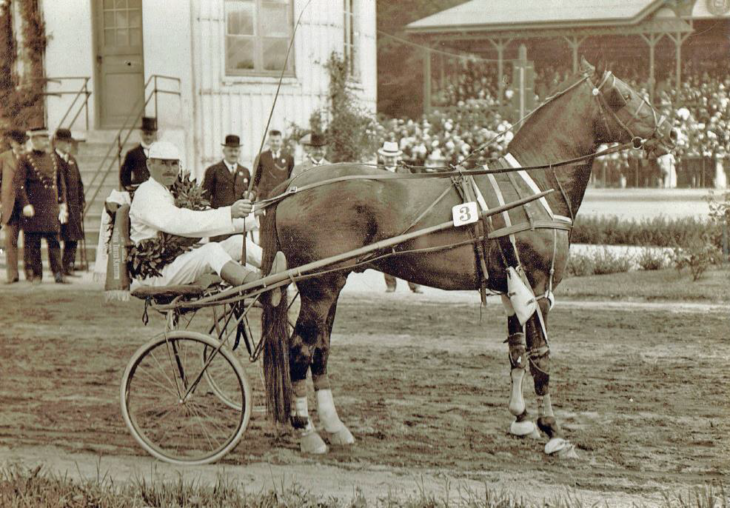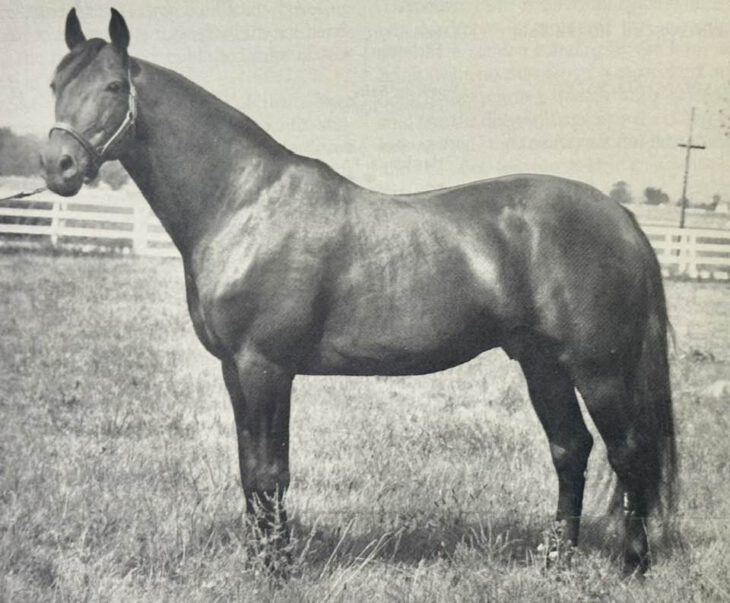
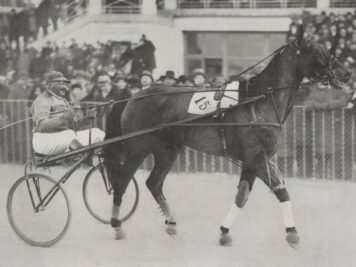
The Norwegian Trotting association started to keep stallion records in 1928, and every year until 1936 the Kentucky-born chestnut stallion The Eno was the undisputed champion. However, the excellent trotter and stallion had a rough start on his career causing wanna-be comedians to suggest the horse shouldn’t be trotting but rather be touring with a circus.
Read MoreEuropean
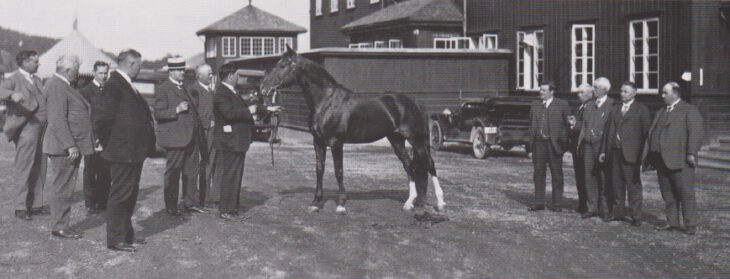
The definition of superiority
Hen was sacrificed to let his stablemate win the Hambletonian, then sold to Europe in anger. There he became arguably the most...
Read More
The first Hambo favorite
While Guy McKinney gained fame as the winner of the very first Hambletonian in 1926, he was not the early spring favorite. That...
Read More
The forgotten Queen
While the first French trotting queen, Uranie, was wholly French-pedigreed, her successor was a great early example of the...
Read More
The queen’s terrible demise
She was a really good youngster in the US, winning the Hambletonian Oaks and Kentucky Futurity filly, and blossomed into one of...
Read More
The king of Norway
Throughout history there have been a few select horses that have singlehandedly increased the interest in harness racing and...
Read More
The mythical kick
When Juhani Lagerstam started the Laukko trotting stud farm at Vesilahti in Finland he needed a few stallions to use on his many...
Read MoreOnce in a blue moon a horse receives attention disproportionate to its trotting abilities. Anteeo Custer was a good trotter in Scandinavia more than 100 years ago, but has received much more attention for one single foal that may not even be his.
Read MoreThe number of US-born stallions exported to Europe is staggering high, with very few horses going the other way for stallion duty. While some think European-born stallions in the US is a very recent thing, history shows that is not the case. In fact, the first European trotting stallion in the US arrived just a few years after the second World War. The story of Quel Veinard is both strange and fascinating, but more than anything also the story about an almost forgotten horse.
Read MoreThe Franco-American cross is more popular than ever, and many in the US have also recognized the benefits of such a breeding. It’s often said the cross created a new breed (figuratively, not literally) in the 80s and 90s. Though there is some truth to that, the Franco-American cross was very popular much earlier than that. In fact, more than 100 years ago the French trotter (Trotteur Francais) could not compete with neither the American standardbreds nor the Russian orlov trotters. Then came a French-American cross to establish himself as the first French international star.
Read More